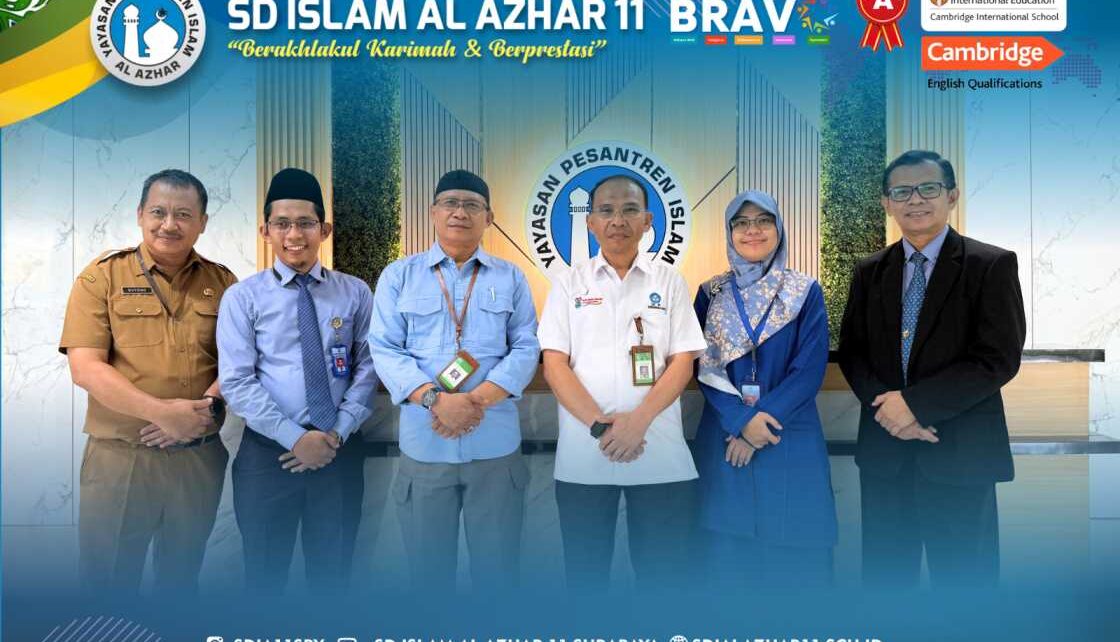
Surabaya, September 29th, 2025 – A significant event took place at SD Islam Al Azhar 11 Surabaya with the arrival of Dr. Khamim, M.Pd., Senior Expert Widyaprada from the Ministry of Education and Culture. The visit was dedicated to conducting a Monitoring and Evaluation (Monev) of the national program, “The 7 Habits of Great Indonesian Children” (or in Bahasa Indonesia it’s called “7 Kebiasaan Anak Indonesia Hebat”).
This Monev served as a crucial reflective moment, assessing the school’s implementation and reinforcing its strategies for character education in Islamic schools. The program’s core goal is to instill seven positive habits—including waking up early, worship/prayer, exercising, healthy eating, love for learning, community engagement, and adequate sleep—as the foundation for a healthy, intelligent, and resilient Indonesian generation.
Measuring Success and Identifying Challenges
Dr. Khamim outlined the Monev’s key objectives: to measure the program’s success, identify implementation challenges faced by both the school and families, provide recommendations for optimal performance, and ensure active involvement from all stakeholders—teachers, parents, and the community.
SDIA 11 was highlighted as a model school for successfully integrating this national initiative into students’ daily lives. Dr. Khamim noted that the school’s achievement stems from the strong commitment of the entire community, from the principal to the parents, to help students embody these seven habits.
The Al Azhar Advantage: Integrating Adab Education
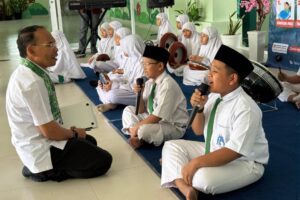
What sets SDIA 11 apart is its innovative approach: the 7 Habits of Great Indonesian Children are synergized with the 8 Reinforcements of Etiquette (Adab) Education. These Adab reinforcements cover essential areas, including etiquette towards Allah, the Prophet, the Qur’an, others, oneself, and the environment.
This integration is the hallmark of the Al Azhar School’s strength. The school firmly believes that intellectual development and good habits must be balanced with moral character (Adab). This ensures students are not just smart and healthy, but also morally upright (berakhlak mulia).
“This is truly exceptional. SD Islam Al Azhar 11 Surabaya has shown how national policy can be enriched with Islamic Adab values. Children are not only taught healthy routines but also trained to respect teachers, protect the environment, and love the Qur’an. This is what holistic character education is all about,” Dr. Khamim praised.
From Policy to Daily Practice
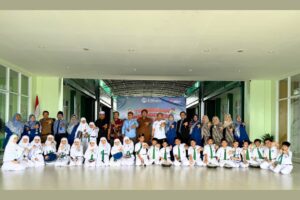
School Principal, Hanifah Yunita, S.Pd, explained that the program has become a daily routine for students. Teachers lead by example, initiating learning with simple acts like group prayer, Qur’an reading, and collaborative clean-up duties. Crucially, the school involves parents through dedicated parenting sessions and monitoring checklists, ensuring the positive habits continue at home.
The results are evident: students show increased discipline, a higher spirit for learning, better cleanliness, and greater empathy for their peers.
Despite ongoing challenges—such as limiting gadget use or ensuring early bedtime—Dr. Khamim emphasized that the program is vital for achieving the vision of the Golden Generation 2045: a future generation excelling in intellect, strong in character, and morally excellent.
In closing, Dr. Khamim urged the school to maintain its spirit. “Character education must not remain a slogan. It must become a daily culture of life. Al Azhar 11 has started this excellently.”
The Monev concluded with the confirmation that SD Islam Al Azhar 11 Surabaya has established a complete and balanced model of character education, successfully merging good habits with Adab to pave the way for a brilliant Indonesian future.